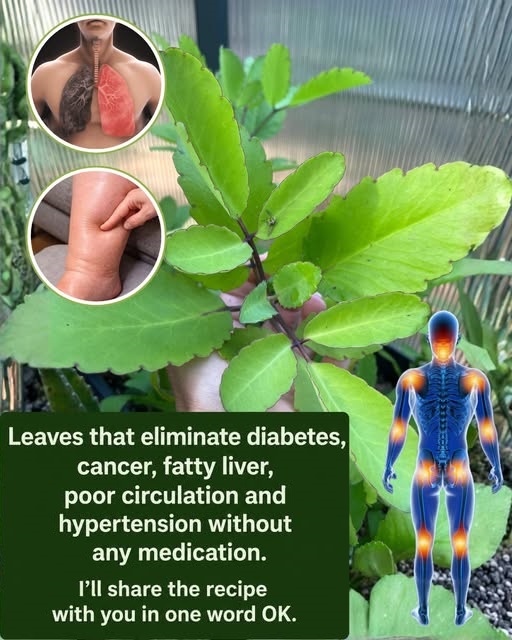
Can One Natural Leaf Really Fight Diabetes, Cancer, Fatty Liver, High Blood Pressure, and Poor Circulation?
Looking Beyond the Viral Health Claims
Every day, social media platforms are flooded with posts promoting natural remedies that supposedly solve some of the world’s most serious health problems. One of the most widespread claims suggests that a single plant leaf can eliminate diabetes, cure cancer, reverse fatty liver disease, improve blood circulation, and lower high blood pressure naturally.
These viral posts often focus on herbs such as moringa, guava leaves, olive leaves, neem, or soursop leaves. The headlines are usually designed to grab attention instantly:
- “One leaf can cure multiple diseases.”
- “Doctors don’t want you to know about this natural secret.”
- “Stop taking medications after trying this remedy.”
- “The miracle plant that changes everything.”
It’s easy to understand why these messages spread so quickly. Millions of people are searching for natural ways to support their health, especially when dealing with chronic conditions that require long-term care.
However, when we compare these claims with current scientific evidence, a very different picture emerges.
While many plants contain valuable nutrients and biologically active compounds, there is currently no scientific proof that a single leaf can cure or eliminate several major diseases at once. Understanding the difference between health support and disease treatment is essential when evaluating health information online.
Why People Are Drawn to Miracle Health Solutions
Living with chronic health conditions can be challenging.
Diseases such as:
- Type 2 diabetes
- Cancer
- Fatty liver disease
- High blood pressure
- Circulatory disorders
often require ongoing medical supervision, lifestyle adjustments, and long-term management strategies.
Because of this, the promise of a simple natural solution can feel incredibly appealing. The idea that one herb could replace medications and solve multiple health issues at once offers hope and convenience.
Unfortunately, human health is much more complex.
Different diseases develop through different biological mechanisms, which means effective treatment usually depends on addressing the specific condition rather than relying on a universal cure.
Health Benefits Are Not the Same as Medical Cures
One of the most common misconceptions surrounding herbal remedies is the assumption that a health benefit automatically equals a cure.
Certain plants may provide valuable compounds that can:
- Supply vitamins and minerals
- Deliver antioxidant support
- Contribute to a balanced diet
- Support normal digestive function
- Help maintain overall wellness
These potential benefits do not mean the plant can cure disease.
A nutritious food or herbal ingredient may complement a healthy lifestyle, but that is very different from replacing evidence-based medical treatment.
Popular Leaves Frequently Promoted Online
Several plant leaves repeatedly appear in viral health posts. While researchers continue studying their properties, the evidence behind many online claims is often exaggerated.
Moringa Leaves
Moringa is widely recognized for its impressive nutritional profile. It contains vitamins, minerals, antioxidants, and various plant compounds that have attracted scientific interest.
Researchers have investigated its possible role in:
- Nutritional support
- Antioxidant protection
- Blood sugar management
Although early findings are interesting, there is currently no reliable evidence showing that moringa can cure diabetes, cancer, or fatty liver disease.
Many studies remain preliminary, involve small sample sizes, or have been conducted primarily in animals rather than humans.
Guava Leaves
Guava leaves have long been used in traditional practices and have been studied for their potential effects on digestion and glucose metabolism.
Some research suggests possible benefits, but the evidence remains limited.
Claims that guava leaves can eliminate chronic diseases are not supported by strong clinical research.
Olive Leaves
Olive leaves contain naturally occurring compounds such as oleuropein, which researchers continue to examine for their possible cardiovascular benefits.
While olive leaf extracts may contribute to overall wellness, they have not been scientifically proven to cure hypertension, diabetes, or cancer.
Neem Leaves
Neem has been used traditionally in various regions for centuries.
Laboratory studies have explored different biological activities associated with neem compounds, but human clinical evidence remains limited.
Current scientific data does not support claims that neem can cure serious diseases.
Soursop Leaves
Soursop leaves are among the most heavily promoted herbal remedies online, particularly regarding cancer.
Laboratory experiments have shown that certain compounds from soursop can affect cancer cells under controlled conditions.
However, results observed in laboratory dishes do not automatically translate into effective treatments for people.
To date, no high-quality clinical evidence demonstrates that soursop leaves cure cancer in humans.
Why Laboratory Research Doesn’t Always Translate Into Real-World Results
Many viral health claims begin with laboratory studies.
In these experiments, scientists expose isolated cells to concentrated plant extracts and observe biological reactions.
Sometimes these compounds appear to:
- Influence cancer cells
- Affect inflammation markers
- Alter glucose metabolism
While such findings may justify additional research, they do not prove that the same effects occur safely inside the human body.
For any treatment to be considered effective, it must:
- Be properly absorbed
- Reach the intended target tissue
- Remain active within the body
- Demonstrate safety
- Show measurable benefits in human clinical trials
Many promising laboratory discoveries never become approved medical treatments.
Can Any Leaf Cure Type 2 Diabetes?
Current scientific evidence says no.
No plant leaf has been proven to cure Type 2 diabetes.
Researchers continue investigating natural compounds that may help support healthy blood sugar levels, but managing diabetes typically requires a comprehensive approach that may include:
- Healthy dietary habits
- Regular physical activity
- Weight management
- Medical monitoring
- Prescription treatment when necessary
Relying solely on herbal remedies can delay proper care and increase the risk of long-term complications.
Can Plants Cure Cancer?
Cancer is not a single disease but a broad group of hundreds of different conditions.
Because cancers behave differently, treatment approaches vary significantly.
Some modern medications have originated from plant-derived compounds, but those medicines underwent:
- Extensive scientific research
- Purification and standardization
- Safety evaluations
- Human clinical trials
- Regulatory approval processes
Consuming a plant or herbal tea is not equivalent to receiving an approved cancer treatment.
The Truth About Fatty Liver Disease
Nonalcoholic fatty liver disease (NAFLD) affects millions of people worldwide.
Management often focuses on:
- Achieving a healthy weight
- Improving dietary patterns
- Increasing physical activity
- Managing blood sugar levels
- Controlling cholesterol and triglycerides
Although certain herbs continue to be studied for potential liver-supportive effects, no single leaf has been proven to eliminate fatty liver disease on its own.
Understanding Poor Circulation
Poor circulation can develop from various underlying causes, including:
- Peripheral artery disease
- Diabetes
- Cardiovascular disease
- Blood vessel disorders
Because circulation problems can result from different medical conditions, proper diagnosis is essential.
No herbal remedy should replace professional evaluation and treatment when circulation issues are present.
High Blood Pressure Requires Serious Attention
High blood pressure is often called a silent condition because symptoms may not appear until complications develop.
Uncontrolled hypertension increases the risk of:
- Heart attack
- Stroke
- Kidney disease
- Vision complications
While some herbs may support overall cardiovascular health, no leaf has been shown to consistently replace prescribed blood pressure treatment.
Risks of Relying Exclusively on Herbal Remedies
Natural products are not automatically harmless.
Potential concerns include:
Delayed Treatment
Serious medical conditions may worsen when professional care is postponed.
Medication Interactions
Some herbs can interfere with prescription medications.
Unrealistic Expectations
Miracle-cure marketing often creates false hope.
Possible Side Effects
Certain herbal products may cause unwanted reactions or even liver toxicity when used improperly.
Financial Scams
Many miracle remedies are sold at premium prices despite lacking strong scientific evidence.
What Science Consistently Recommends
Instead of searching for a single cure-all solution, health experts emphasize proven lifestyle strategies.
Balanced Nutrition
A healthy eating pattern typically includes:
- Vegetables
- Fruits
- Whole grains
- Lean protein sources
- Healthy fats
Regular Exercise
Physical activity supports:
- Heart health
- Blood sugar regulation
- Weight management
- Overall wellness
Quality Sleep
Adequate sleep plays an important role in long-term health.
Stress Management
Reducing chronic stress may positively influence both physical and mental well-being.
Routine Medical Care
Regular checkups help identify health concerns early and support effective management.
How to Spot Questionable Health Claims Online
Before believing a dramatic health promise, consider the following questions:
- Is there strong human clinical research behind the claim?
- Do respected medical organizations support it?
- Does it sound too good to be true?
- Is someone trying to sell a product?
- Can the information be verified through trustworthy sources?
Extraordinary claims require strong scientific evidence.
Final Thoughts
The claim that a single leaf can eliminate diabetes, cancer, fatty liver disease, poor circulation, and high blood pressure is not supported by reliable scientific evidence. Although plants such as moringa, guava leaves, olive leaves, neem, and soursop contain beneficial compounds and may contribute to a healthy lifestyle, none have been proven to cure these serious medical conditions.
Long-term health is rarely the result of one ingredient or one remedy. Instead, it typically comes from a combination of healthy habits, balanced nutrition, regular physical activity, professional medical care, and evidence-based treatment when necessary.
When you encounter viral health claims online, stay curious—but also stay critical. Taking time to verify information and consult qualified healthcare professionals remains one of the most effective ways to make informed decisions about your health.
Disclaimer: This content is provided for educational and informational purposes only. It is not intended to diagnose, treat, cure, or prevent any disease and should not replace professional medical advice. Always consult a qualified healthcare provider regarding any health concerns or treatment decisions.