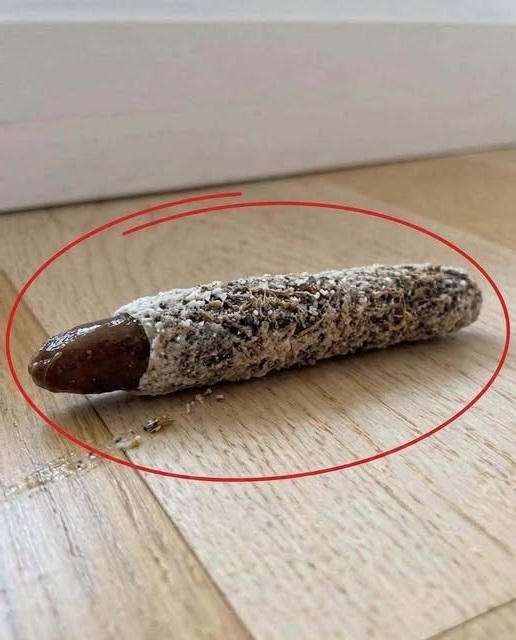
At first, it looked like a tiny piece of dust rolled into a rough tube. Lying near the wall, the strange object caught my attention because one end appeared open, with something brown peeking out. I almost mistook it for ordinary debris, but its unusual shape made me look closer.
The object may have been a case built by a case-bearing moth larva, sometimes called a household casebearer. These tiny insects create portable shelters using silk mixed with dust, hair, lint, and other particles collected from their surroundings.
What makes this discovery fascinating is that the larva carries its protective case wherever it goes. Its small body can extend through an opening to move and feed, then retreat inside when disturbed. This rough covering helps camouflage the creature against floors, walls, and other household surfaces.
Although finding a small insect case on your floor may look alarming, it does not automatically mean your home is infested. These insects can appear in quiet corners, closets, beneath furniture, and along baseboards, where dust, lint, and fibers accumulate.
However, some related moth larvae can damage natural materials such as wool, silk, fur, and feathers. If you discover several cases near clothing, rugs, or carpets, inspect those items for small holes, shed skins, or other signs of insect activity.
How to Get Rid of Case-Bearing Moth Larvae
Fortunately, the first steps are simple. Remove the object with a tissue or vacuum cleaner, then clean nearby corners, baseboards, closets, and spaces beneath furniture. Regular vacuuming helps remove lint, hair, and other debris that may provide hiding places or materials for these insects.
If you repeatedly discover similar cases, inspect stored fabrics and clean affected areas carefully. Clothing made from natural fibers should be checked for damage, especially if it has been stored for a long time. If the problem continues or you notice damage to fabrics, consider contacting a qualified pest-control professional.
Are Tiny Brown Tubes on the Floor Dangerous?
In most cases, finding one small case is not a reason to panic. The object may belong to a case-bearing moth larva or another insect that creates a protective covering. However, its exact identity cannot be confirmed from its appearance alone.
Several insects produce similar cases, so a clear photograph or professional identification may be necessary if you continue finding them around your home.
Where Do Household Casebearers Hide?
These insects may be found in quiet areas where dust and fibers collect, including:
- Along baseboards and wall edges
- Beneath beds, sofas, and other furniture
- Inside closets and storage areas
- Near rugs, carpets, and natural-fiber fabrics
- In corners that are rarely vacuumed
Checking these areas and keeping them clean can help you determine whether the discovery was isolated or part of a recurring pest problem.
When Should You Be Concerned?
One isolated case does not necessarily indicate a serious pest problem. However, finding multiple cases, discovering larvae repeatedly, or noticing unexplained holes in wool clothing, blankets, or other natural fabrics may justify a closer inspection.
If the signs persist despite thorough cleaning, professional pest identification can help determine the appropriate next steps.
Final Thoughts
Sometimes, what looks like an ordinary speck of dirt turns out to be a remarkable example of nature’s ingenuity. A tiny, tube-shaped object on your floor may be the portable shelter of a case-bearing moth larva, a small insect that uses silk and household debris to protect itself.
A tiny mystery on your floor can reveal an entire hidden world of insect behavior. If you find one, inspect it carefully, clean the surrounding area, and watch for additional signs before assuming your home has a pest infestation.
Note: The exact insect species cannot be confirmed from the description alone. Identification may require a clear photograph or expert assessment.