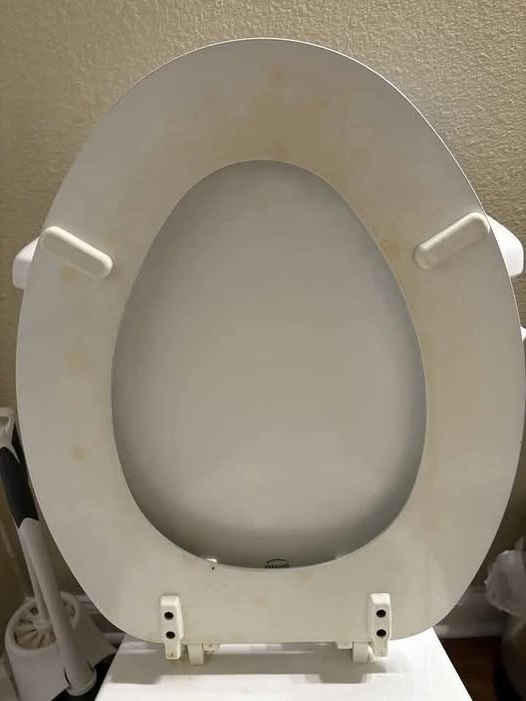
You scrub. You disinfect. You wipe everything down until it shines.
Yet somehow, that stubborn yellow stain on the toilet seat refuses to disappear.
It can make an otherwise spotless bathroom look dirty, leaving many homeowners wondering if they simply need to buy a new toilet seat.
The good news is that many yellow stains can be reduced—or even removed—with the right cleaning method. Even better, you don’t need harsh chemicals or excessive scrubbing that could damage the surface.
In this guide, you’ll learn what actually causes these stains, the safest cleaning methods, and a few simple habits that help prevent them from coming back.
Why Do Toilet Seats Turn Yellow?
Yellow discoloration doesn’t always mean the toilet is dirty.
In many cases, it’s simply the result of materials reacting over time.
Common causes include:
- Hard water mineral deposits
- Urine residue that wasn’t completely removed
- Cleaning product buildup
- Natural aging of plastic materials
- Direct sunlight causing discoloration
- Damage from harsh bleach or abrasive cleaners
Sometimes the stain sits only on the surface.
Other times, older plastic toilet seats may become permanently discolored as they age.
Knowing the difference can save you hours of unnecessary scrubbing.
Before You Start Cleaning
A few simple precautions make the job easier.
Gather:
- Baking soda
- White vinegar
- Warm water
- Soft microfiber cloth
- Non-scratch sponge
- Soft toothbrush
- Rubber gloves (optional)
Avoid using:
- Steel wool
- Metal scrubbers
- Sharp scraping tools
- Strong abrasive powders
These can scratch the plastic, making future stains even easier to collect.
Method 1: Baking Soda Paste
One of the gentlest ways to tackle yellow stains is with baking soda.
You’ll Need
- 3 tablespoons baking soda
- Enough water to form a thick paste
Instructions
- Mix the baking soda with a small amount of water.
- Spread the paste over the stained area.
- Let it sit for 15–20 minutes.
- Gently scrub using a soft sponge.
- Rinse thoroughly with clean water.
- Dry with a microfiber cloth.
This method helps lift surface stains without scratching the finish.
⚠️ Don’t miss the rest! The full article continues on the next page 👇📖
Tap “Next Page” to see all the details, tips, and surprises waiting for you!