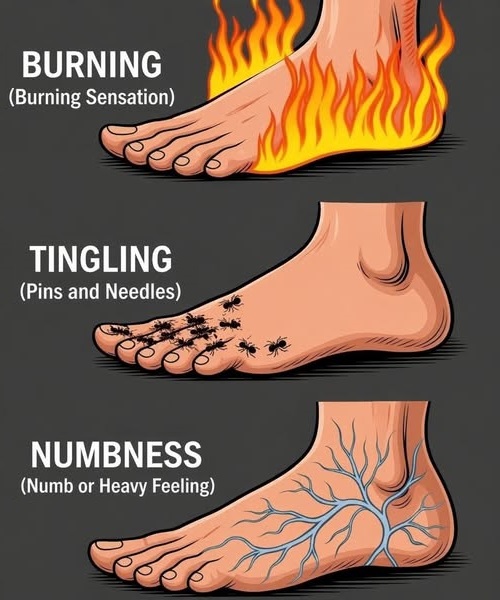
Have you ever stood up after sitting for a while and suddenly felt a wave of tingling race through your feet? Or perhaps you’ve experienced a burning sensation that seems to appear without warning, making every step feel uncomfortable. While occasional “pins and needles” are usually harmless, recurring symptoms shouldn’t be ignored.
Many people assume these sensations are simply part of getting older or the result of tired feet. In reality, burning, numbness, and tingling can have many different causes, ranging from temporary nerve pressure to health conditions that may require medical attention.
The good news is that understanding what may be causing these symptoms is the first step toward finding appropriate relief.
What Causes Burning, Numbness, or Tingling in the Feet?
The familiar “pins and needles” sensation is medically known as paresthesia. It often develops when nerves become compressed or when blood flow is temporarily reduced.
Most episodes disappear within a few minutes after changing position or moving around. However, when these sensations occur frequently or persist for long periods, they may signal an underlying issue.
Let’s look at some of the most common causes.
1. Temporary Pressure on the Nerves
One of the most common—and least serious—causes is simply staying in one position for too long.
Crossing your legs, sitting on your feet, standing for extended periods, or wearing tight footwear can place pressure on nerves and temporarily reduce circulation.
Common symptoms include:
- Mild tingling
- Temporary numbness
- A “pins and needles” feeling
- Slight discomfort when standing
Fortunately, these symptoms usually disappear once normal blood flow and nerve function return after moving around.
2. Peripheral Neuropathy
When tingling or burning becomes frequent, peripheral neuropathy may be one possible explanation.
Peripheral neuropathy occurs when nerves outside the brain and spinal cord become damaged.
Symptoms may include:
- Burning sensations
- Tingling or prickling
- Reduced feeling in the feet
- Increased sensitivity to touch
- Difficulty sensing temperature changes
Peripheral neuropathy can develop for many reasons, including diabetes, certain infections, injuries, vitamin deficiencies, or side effects from some medications.
Because the causes vary widely, proper medical evaluation is important if symptoms continue.
3. Poor Blood Circulation
Healthy circulation delivers oxygen and nutrients throughout the body. When circulation is reduced, the feet are often among the first places where symptoms appear.
Poor circulation may contribute to:
- Cold feet
- Tingling sensations
- Numbness
- Leg discomfort
- Slower healing of minor injuries
Improving daily movement and managing underlying health conditions may help support healthy circulation.
4. Vitamin Deficiencies
Your nerves depend on several nutrients to function properly.
In particular, deficiencies in B vitamins may contribute to nerve-related symptoms.
Important vitamins include:
- Vitamin B1
- Vitamin B6
- Vitamin B12
If a deficiency is suspected, a healthcare professional can recommend appropriate testing and treatment rather than guessing through supplements alone.
5. Conditions Affecting the Spine
Sometimes the problem doesn’t begin in the feet at all.
Nerves travel from the spinal cord down into the legs and feet. Conditions such as herniated discs or nerve compression in the lower back can cause symptoms that radiate downward.
In these cases, burning or numbness in the feet may be accompanied by:
- Lower back pain
- Pain traveling down one leg
- Muscle weakness
- Changes in balance
Because spinal problems can worsen over time, persistent symptoms should always be evaluated by a healthcare provider.
Continue to Part 2…
⚠️ Don’t miss the rest! The full article continues on the next page 👇📖
Tap “Next Page” to see all the details, tips, and surprises waiting for you!