
Child Foot Pain Before a Dance Recital? What That Rough Spot With Black Dots May Be
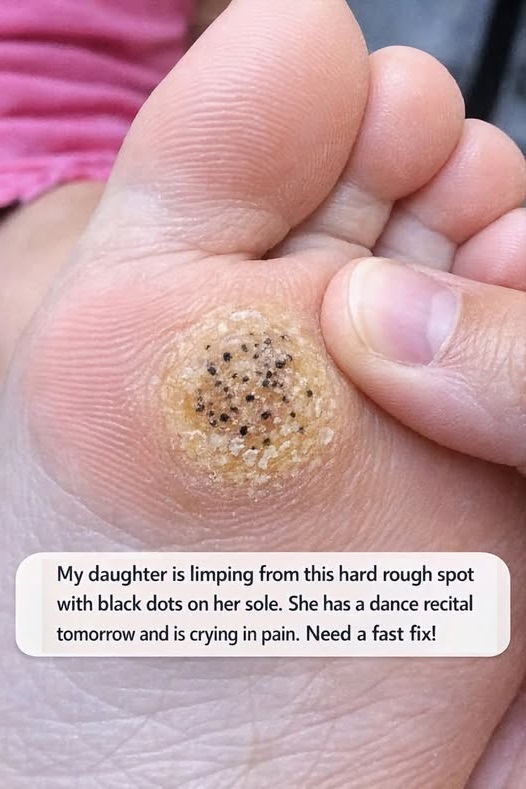
A rough, hardened area on the bottom of a child’s foot that contains small dark dots can be consistent with a plantar wart.
Plantar warts develop on the soles of the feet and are associated with certain types of human papillomavirus (HPV).
The virus can enter through tiny breaks or openings in the skin.
As the growth develops, the skin around it can become thick and rough. Because the area is repeatedly exposed to pressure from walking, running, or standing, a plantar wart may grow inward and become uncomfortable.
The small black dots sometimes visible inside the wart are commonly tiny blood vessels that have clotted.
This distinctive appearance is one reason parents may notice something unusual even before knowing what it is.
Why Can a Plantar Wart Hurt So Much?
The location matters.
A wart on the sole of the foot can be subjected to pressure every time your child takes a step.
Walking.
Standing.
Running.
Jumping.
Dancing.
All of these activities can put pressure on the affected area.
The thickened skin surrounding the growth can also make it resemble a callus, which can make identification difficult.
For a child preparing for a dance recital, repeated pressure from dance shoes and movements may make the discomfort more noticeable.
Plantar Wart vs. Callus: What’s the Difference?
Plantar warts and calluses can look surprisingly similar.
There are, however, a few clues that may help you tell them apart.
Plantar Wart
A plantar wart may:
- Have a rough or uneven surface
- Appear as a rounded hardened area
- Contain tiny black dots
- Develop on the sole of the foot
- Become painful with pressure
- Disrupt the normal pattern of the skin
Callus
A callus generally:
- Develops where repeated friction or pressure occurs
- Produces thicker, harder skin
- Has a more uniform appearance
- Usually spreads over a broader area
- Does not typically contain the characteristic dark dots associated with plantar warts
The appearance alone cannot always provide a definite diagnosis, especially in children.
If you’re unsure what you’re seeing, a healthcare professional can examine the area and determine what it is.
Could It Be a Splinter or Blister?
Other foot problems can sometimes resemble a plantar wart.
A Splinter
A splinter often has a specific point where the object entered the skin.
You may see or feel a small foreign object beneath the surface, although tiny splinters can sometimes be difficult to identify.
A Blister
Blisters commonly develop after friction.
Unlike a wart or callus, a blister often contains clear or cloudy fluid and may appear after wearing unfamiliar shoes or engaging in increased physical activity.
A Callus
A callus is usually a thicker area of skin caused by repeated pressure or friction.
Unlike a typical plantar wart, it generally does not have multiple tiny dark dots within it.
Pay Attention to How the Pain Feels
The way the area responds to pressure can provide another clue.
Plantar warts may feel particularly uncomfortable when pressure is applied from the sides of the affected area.
Calluses often hurt primarily when direct pressure is placed over the thickened skin.
However, pain patterns can vary, so this should not be used as a substitute for professional evaluation.
When Should a Child See a Healthcare Professional?
If your daughter is experiencing significant foot pain, it is worth taking the problem seriously rather than simply trying to push through the discomfort for a performance.
Seek medical advice promptly if you notice:
- Significant or worsening pain
- Redness around the area
- Swelling
- Increased warmth
- Drainage or discharge
- Signs of possible infection
- Difficulty walking
- Difficulty putting weight on the foot
- Rapid changes in the affected area
A healthcare professional can determine whether the spot is actually a plantar wart or another condition requiring different care.
How to Make the Foot More Comfortable at Home
If the area appears minor and there are no concerning symptoms, there are several gentle ways to reduce discomfort.
1. Soak the Foot
A warm-water foot soak for approximately 15 minutes may help soften hardened skin and provide temporary comfort.
Afterward, dry the foot carefully.
Avoid aggressively scrubbing, cutting, or scraping the affected area.
2. Consider an Over-the-Counter Wart Treatment
If a plantar wart is suspected, an over-the-counter wart treatment may be an option.
Follow the product directions carefully and make sure the treatment is appropriate for your child’s age.
If you are uncertain whether the spot is actually a wart, ask a healthcare professional or pharmacist before using a treatment.
3. Reduce Pressure With Cushioning
One of the most useful things you can do before a dance recital is reduce direct pressure on the painful area.
A soft cushioning pad or donut-shaped pad can help distribute pressure around the sensitive spot rather than directly onto it.
This can be particularly useful when your child needs to stand, walk, or dance.
4. Use Comfortable Footwear
Dance shoes can place pressure on specific areas of the foot.
If possible, make sure the footwear fits properly and does not create unnecessary pressure or friction.
A soft insole may also provide additional cushioning if the shoe allows enough room.
Avoid making the shoe so tight that it compresses the foot.
Can Padding Help During a Dance Recital?
In some cases, strategic cushioning may make movement more comfortable.
A soft protective pad can be positioned around the painful area and secured with appropriate medical tape.
The goal is to reduce pressure and friction—not to tightly wrap the foot.
Make sure circulation is not restricted.
If your child experiences increased pain, numbness, tingling, discoloration, or discomfort after applying the padding, remove it and seek appropriate advice.
Most importantly, your child should not be encouraged to dance through severe pain.
A recital is important, but your child’s health and comfort come first.
Small Footwear Changes Can Make a Big Difference
Sometimes the simplest adjustments help reduce irritation.
Check whether the dance shoes are:
- Too tight
- Rubbing the affected area
- Pressing directly against the painful spot
- Lacking adequate cushioning
- Causing unusual friction
If appropriate for the costume and activity, soft protective material may help reduce rubbing.
Also check tights, socks, or costume pieces that come into contact with the foot and ankle.
The objective is simple:
Reduce friction. Reduce pressure. Avoid making the irritated area worse.
What Parents Should Avoid
When a child has a painful rough spot and an important event is approaching, it can be tempting to try an aggressive home remedy.
That can backfire.
Avoid:
- Cutting the growth with scissors or a blade
- Digging into the skin
- Scraping aggressively
- Trying to remove the area yourself
- Applying harsh or unverified substances
- Using treatments that are not appropriate for children
Damaging the surrounding skin can increase irritation and potentially introduce infection.
Gentle care is especially important when there is limited time before an event.
What If It Doesn’t Go Away?
If the spot continues causing discomfort after the recital, consider arranging an evaluation with a healthcare professional.
Depending on the diagnosis, treatment options may include specialized topical products or procedures designed to address a wart.
The appropriate approach can depend on factors such as:
- Your child’s age
- The size of the growth
- Its location
- How painful it is
- How long it has been present
- Whether previous treatments have been attempted
A professional can help determine the safest option rather than relying on trial and error.
Don’t Forget the Emotional Side
Physical discomfort isn’t the only thing that can affect a child before a performance.
Your daughter may be worried about:
- Missing the recital
- Being unable to perform
- Falling behind her classmates
- Having other people notice her limp
- Disappointing her dance teacher
- Losing an experience she has been looking forward to
Reassure her that her health matters more than one performance.
Let her know that you’re there to help her make the best decision based on how she feels.
Simple reassurance, calm breathing, and focusing on the parts of the recital she enjoys can also help reduce anxiety.
How to Protect Your Child’s Feet in the Future
There are several simple habits that can support healthy feet and reduce exposure to common foot problems.
Encourage your child to:
- Wear footwear in shared public areas
- Keep feet clean and dry
- Change damp socks
- Avoid sharing shoes or personal footwear
- Check feet regularly for unusual changes
- Pay attention to cuts, scrapes, or irritated skin
- Wear properly fitting shoes during sports and dance activities
If you notice an unusual spot early, monitoring it can help you address discomfort before it interferes with normal activities.
Frequently Asked Questions
What are the black dots inside a plantar wart?
The tiny dark dots commonly seen in plantar warts are small blood vessels that have clotted. They can be one of the clues that help distinguish a wart from a simple callus.
Are plantar warts common in children?
Plantar warts can occur in children and adults. They develop on the soles of the feet and may become uncomfortable because the area is repeatedly exposed to pressure.
Can a plantar wart make a child limp?
Yes, a painful spot on the sole of the foot can make walking uncomfortable and may cause a child to change the way they walk or limp.
Can my child still participate in a dance recital?
That depends on the severity of the pain and the underlying cause. If your child has significant pain or difficulty bearing weight, it is better to seek medical advice rather than encouraging them to push through it.
Should I cut or scrape the wart at home?
No. Cutting, digging, or aggressively scraping a suspected wart can injure the surrounding skin and increase irritation or infection risk.
Can cushioning help with foot pain during dancing?
Cushioning may reduce direct pressure on a painful area and make movement more comfortable. However, it should not be used to mask severe pain or allow a child to continue an activity that is causing significant discomfort.
When should I worry about a painful spot on my child’s foot?
Seek medical advice if there is severe or worsening pain, redness, swelling, warmth, discharge, difficulty walking, difficulty bearing weight, or other concerning changes.
The Bottom Line
A rough patch with tiny black dots on the bottom of a child’s foot may be a plantar wart, particularly when it appears in an area that receives repeated pressure.
Because plantar warts can resemble calluses and other common foot problems, it is important not to assume the diagnosis based solely on appearance.
For temporary comfort, gentle measures such as warm-water soaking, appropriate cushioning, and properly fitting footwear may help reduce pressure.
But if your child has significant pain, difficulty walking, signs of infection, or worsening symptoms, professional medical advice is the safest choice.
And if a dance recital is approaching, remember one important thing:
The goal isn’t simply to get your child through the performance. It’s to make sure she feels safe, comfortable, supported, and healthy.
One recital is a special moment—but your child’s well-being matters far beyond a single day on stage.