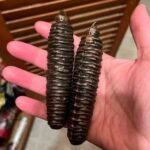
Their unusual appearance makes them relatively easy to recognize:
- Shape: The fruit can have two or more pointed projections that resemble horns.
- Color: Mature fruits are typically dark brown to nearly black.
- Shell: The outer covering is hard and woody.
- Interior: Inside is a pale, firm, starchy seed.
- Flavor: The edible portion is generally mild, slightly sweet, and pleasantly starchy.
The hard exterior is nature’s protection for the seed inside.
Why Are They Called “Caltrops”?
The name comes from an old military device called a caltrop—a small metal object with several sharp points designed so that one point would face upward when thrown onto the ground.
The unusual shape of the water caltrop fruit resembles these old-fashioned objects, which explains the name.
It’s one of those fascinating examples of how traditional food names can come directly from the appearance of a plant or fruit.
A Food With a Long History
Water caltrops have been used as food for centuries in various regions.
In parts of Asia, particularly China and the Indian subcontinent, the fruits have traditionally been collected from freshwater environments and prepared in different ways.
In India, the fruit is commonly known as singhara and has an important place in regional food traditions. It may be eaten boiled, dried and ground into flour, or incorporated into traditional dishes.
Water caltrops have also been used historically in parts of Europe and have an archaeological history that goes back many centuries.
Their cultural importance extends beyond ordinary meals. In some traditions, water caltrop flour is used during religious fasting periods because it provides a starchy food that can be prepared in several ways.
What Do Water Caltrops Taste Like?
Despite their intimidating appearance, the edible interior is quite mild.
The texture is generally firm and starchy, with a subtle sweetness. Some people compare the cooked flesh to other mild starchy foods rather than to conventional tree nuts.
The flavor isn’t particularly strong, which makes the ingredient versatile.
Depending on the preparation, the cooked seed can be eaten on its own or incorporated into savory dishes.
How to Prepare Water Caltrops
If you have fresh water caltrops and know that they are an edible species intended for consumption, preparation generally involves cooking the whole fruit before opening the shell.
1. Clean the Fruits
Rinse the water caltrops thoroughly under clean running water.
Because these fruits grow in aquatic environments and their shells have deep crevices, carefully remove visible mud and debris. A clean vegetable brush can help with stubborn dirt.
2. Cook Thoroughly
Place the cleaned fruits in a pot and cover them with water.
Bring the water to a boil and cook until the fruits are thoroughly heated and the edible interior has become tender.
Cooking times can vary considerably depending on the size, freshness, and species, so don’t rely solely on a specific number of minutes. The goal is to cook them thoroughly rather than simply warming them.
3. Allow Them to Cool
Drain the cooked fruits and allow them to cool enough to handle safely.
The shells can become extremely hot during cooking, so don’t attempt to crack them immediately after removing them from the pot.
4. Crack Open the Shell
The exterior is very hard, so use caution when opening it.
A sturdy nutcracker or appropriate kitchen tool can help. If using a knife, work carefully and keep your hands away from the blade’s path.
Remove the hard shell and discard it.
5. Remove the Edible Seed
Inside you’ll find the pale, starchy seed.
Inspect it carefully before eating and discard any portion that appears spoiled, damaged, or otherwise unsuitable.
How Can You Eat Water Caltrops?
Once properly cooked and shelled, the edible portion can be enjoyed in several ways.
Eat Them Plain
The simplest method is to eat the cooked seed as a snack after removing the shell.
Its mild flavor makes it easy to enjoy with a small amount of salt.
Add Them to Savory Dishes
Cooked water caltrops can be incorporated into various traditional dishes, including curries, soups, and other preparations.
Make Flour
In some culinary traditions, dried water caltrop seeds are processed into flour.
The resulting flour can be used in traditional recipes, particularly in parts of India where singhara flour is associated with fasting and religious food practices.
Are Water Caltrops Healthy?
Water caltrops are primarily a starchy food, and their nutritional composition can vary depending on the species and preparation method.
The edible seed provides carbohydrates and contains various nutrients, including minerals and plant compounds. However, it should be viewed as one food within a balanced nutrition plan rather than as a miracle ingredient.
If you’re monitoring blood sugar, carbohydrate intake, or following a particular dietary plan, remember that water caltrops are a source of starch and should be considered as part of your overall carbohydrate intake.
Important Food-Safety Reminder
This is the most important part if you’ve been given unfamiliar aquatic fruits.
Do not eat wild or unidentified water plants simply because they look like water caltrops.
Aquatic environments can contain microorganisms, parasites, pollutants, and other contaminants. Some plants and plant parts can also be unsafe to consume.
If your neighbor gave you freshly collected fruits, make sure you know exactly what they are and that they came from a reliable, food-safe source.
Also, don’t assume that traditional preparation instructions make an unidentified wild plant safe. Correct identification should come first.
When in doubt, consult a knowledgeable local agricultural extension service, botanist, or other qualified expert before eating unfamiliar foraged foods.
Water Caltrop vs. Water Chestnut
These names can be confusing.
**Water caltrop (**Trapa species):
- Produces a distinctive horned fruit
- Has a very hard outer shell
- Contains a starchy seed
- Often associated with singhara in South Asia
Chinese water chestnut (Eleocharis dulcis):
- Does not have horns
- Produces underground edible corms
- Has crisp, juicy flesh
- Commonly used in Asian stir-fries and other dishes
So if someone hands you a strange, black, horned fruit, don’t assume it is the same ingredient as the crunchy water chestnuts commonly found in canned Asian foods.
Frequently Asked Questions
Can you eat water caltrops raw?
It’s safer to follow the preparation practices appropriate for the specific edible species and source. Proper cooking is generally recommended, particularly because aquatic plants can carry microorganisms or parasites.
Are water caltrops nuts?
Despite names such as “water chestnut” or “buffalo nut,” water caltrops are not conventional tree nuts. They are aquatic fruits containing a starchy edible seed.
Why do water caltrops have horns?
The characteristic projections are part of the fruit’s natural structure. Their resemblance to the old military caltrop is also the reason for their common English name.
Can you eat the shell?
No. The hard outer shell is not the edible portion. The shell should be removed before consuming the interior seed.
Where are water caltrops commonly eaten?
They have culinary traditions in several regions, particularly parts of Asia, including China and India, where different species and preparations have been used for generations.
Final Thoughts
Water caltrops are a fascinating reminder that some of the world’s most unusual foods can have surprisingly long culinary histories. Their dark, horned appearance may make them look mysterious—or even a little frightening—but the edible seed inside has been valued as a traditional starchy food in several cultures.
If you’ve recently received a bag of these strange aquatic fruits, take the time to identify them correctly and learn where they came from before preparing them. Once you’re certain they’re an edible species from a safe source, their unusual appearance becomes part of the fun rather than something to fear.
Sometimes the strangest-looking foods really do have an interesting story hiding underneath.