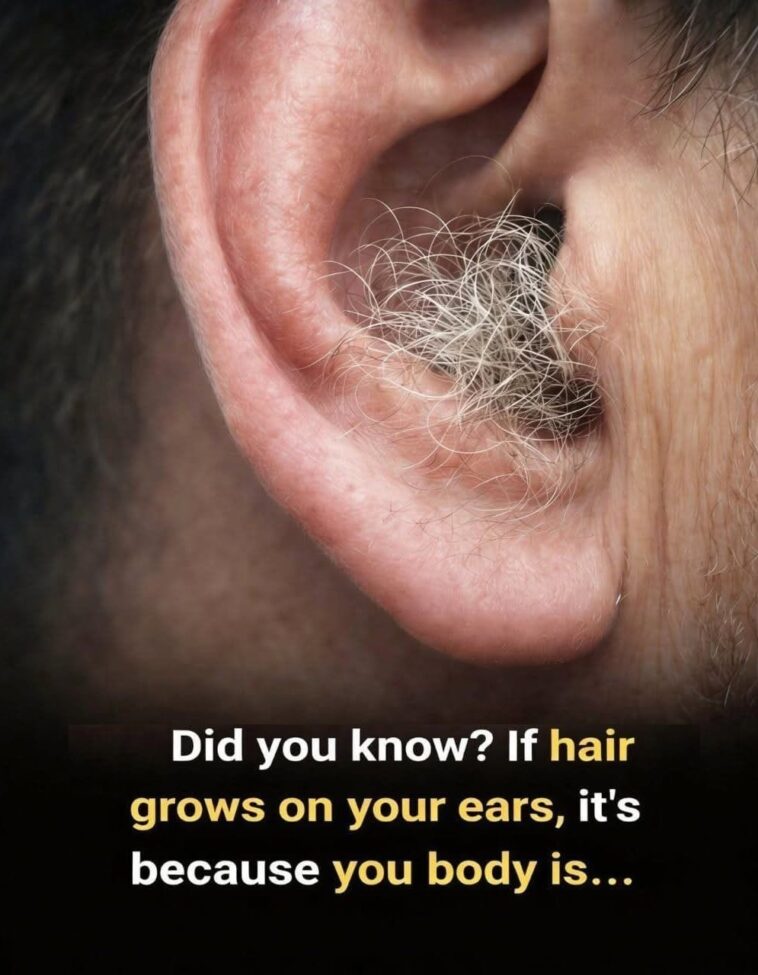
In most cases, ear hair is completely harmless and is simply a natural part of getting older. Still, changes in hair growth can sometimes make people wonder whether they reveal anything about what is happening inside the body.
While ear hair is not a reliable way to diagnose a health condition, there are a few things worth understanding.
Hormonal Changes
A sudden or noticeable increase in hair growth can sometimes occur alongside changes in hormone levels.
If unusual hair growth appears together with other unexplained changes—such as persistent fatigue, changes in mood, or other new symptoms—it may be worth mentioning to a healthcare professional.
However, ear hair by itself does not necessarily indicate a hormonal problem.
The Cardiovascular Connection
You may have heard claims connecting ear hair with heart disease, or references to Frank’s sign, a diagonal crease that can appear across the earlobe.
Some older research has explored possible associations between certain ear characteristics and cardiovascular health. However, the evidence remains inconclusive, and ear hair should not be considered a diagnostic sign of heart disease.
In other words, having noticeable ear hair does not mean that you have a heart problem.
Your external appearance can sometimes reflect broader biological processes, but individual physical features should always be interpreted in context rather than used as a diagnosis.
Why Does Ear Hair Develop?
⚠️ Don’t miss the rest! The full article continues on the next page 👇📖
Tap “Next Page” to see all the details, tips, and surprises waiting for you!