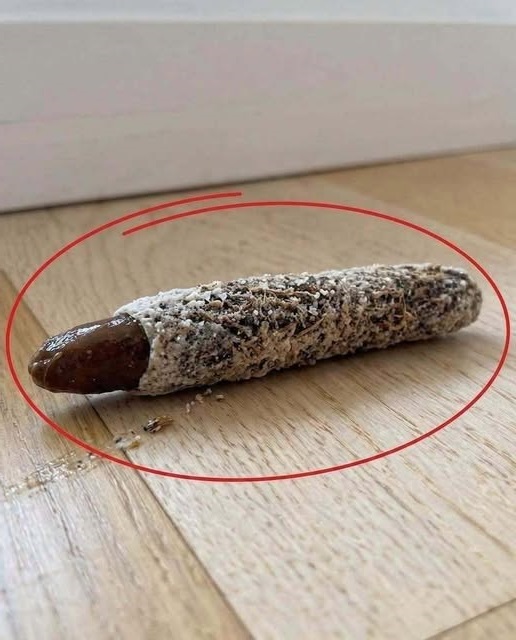
1. Gray Earwax
Gray earwax can sometimes look unusual, particularly if you’re accustomed to seeing yellow or brown wax.
But gray coloration isn’t necessarily a sign of illness.
Environmental exposure can play a role. Dust and airborne particles may become mixed with earwax, particularly in people who spend considerable time in polluted or dusty environments.
Genetics can also influence the characteristics of earwax.
Different populations have statistically different types of earwax, including differences in whether it tends to be wetter or drier.
So if you notice gray earwax without other symptoms, it isn’t automatically a reason to panic.
However, if the change is sudden and occurs alongside ear pain, inflammation, foul-smelling discharge, hearing changes, or significant itching, consider speaking with a healthcare professional.
2. Earwax With Traces of Blood
Blood in or around earwax deserves more attention.
A small amount of blood can sometimes appear after accidentally scratching or irritating the delicate skin inside the ear canal.
This can happen when someone uses a cotton swab, fingernail, hairpin, or another object to clean the ear.
The ear canal contains delicate skin, so even minor trauma can cause bleeding.
However, blood coming from the ear can have other causes, including infection or injury.
If bleeding is persistent, significant, unexplained, or accompanied by severe pain, dizziness, hearing loss, head injury, or fluid coming from the ear, medical evaluation is important.
Avoid putting additional objects into the ear while it is bleeding.
3. Brown Earwax
Brown earwax is often completely normal.
Older earwax naturally becomes darker as it remains in the ear canal and mixes with dust and other particles.
Fresh earwax may appear lighter yellow or golden, while older wax can become darker brown.
Therefore, brown earwax alone does not necessarily indicate that your body is fighting an infection or that your immune system is under stress.
If brown wax appears without pain, discharge, hearing problems, or other unusual symptoms, it may simply reflect normal earwax aging.
4. Black Earwax
Black earwax can look alarming, but the color alone doesn’t provide a diagnosis.
One common explanation is simply older earwax.
As earwax accumulates and becomes exposed to air and particles over time, it can become progressively darker.
However, black or very dark material accompanied by persistent itching, unusual odor, discharge, or ear discomfort may require evaluation.
In some cases, fungal infections of the ear canal can produce dark debris.
Because several conditions can produce similar-looking material, it’s better not to diagnose an infection based solely on color.
5. White or Very Pale Earwax
Very light or whitish earwax can occur naturally, particularly in people who naturally produce drier earwax.
Dry earwax may appear pale, flaky, or almost gray-white.
This can be influenced by genetics and individual differences in earwax production.
However, if the ear canal becomes extremely dry and itchy, or the skin begins to crack or become irritated, a healthcare professional can help determine whether there is an underlying skin condition or another cause.
6. Green or Yellow Ear Discharge
A small amount of yellowish earwax can be normal.
But thick yellow, green, or foul-smelling fluid is different from ordinary earwax.
Discharge may occur with an ear infection or inflammation, particularly when it is accompanied by:
- Ear pain
- Swelling
- Fever
- Reduced hearing
- A feeling of pressure
- Tenderness around the ear
If you notice unusual discharge from the ear, especially if it continues or is accompanied by significant symptoms, seek medical advice.
7. Very Dry, Flaky Earwax
Some people naturally produce dry, flaky earwax.
This is partly influenced by genetics and can be completely normal.
Problems can arise when people repeatedly try to remove every trace of dry wax using cotton swabs.
Frequent cleaning can irritate the skin of the ear canal and may actually make discomfort worse.
If your ears are persistently dry, itchy, painful, or irritated, ask a healthcare professional whether an underlying skin condition or another issue could be responsible.
8. Excessive Earwax or Earwax Blockage
Sometimes the problem isn’t the color of earwax but the amount.
An accumulation of earwax can create a blockage and lead to symptoms such as:
- Reduced hearing
- A feeling of fullness in the ear
- Ear pressure
- Ringing or buzzing
- Mild discomfort
- Changes in hearing clarity
Earwax buildup can happen more easily in some people because of the shape of their ear canal, naturally heavy wax production, hearing aids, or frequent use of in-ear devices.
If you suspect a significant blockage, avoid inserting objects into the ear to dig it out.
A healthcare professional can determine whether the earwax needs to be removed and the safest way to do so.
Does Earwax Really Reveal Your Overall Health?
This is where it’s important to separate internet claims from medical evidence.
Earwax can provide useful information about what is happening in the ear, but it is not a general health test.
For example, the color of earwax cannot reliably tell you whether your immune system is weak, whether your body is “full of toxins,” or whether you’re fighting a systemic infection.
Similarly, brown earwax does not automatically mean you’re exhausted, and black earwax does not automatically mean you have a serious disease.
Earwax should be interpreted alongside other symptoms and, when necessary, a professional examination.
Should You Use Cotton Swabs to Clean Your Ears?
This is one of the most important ear-health questions.
Cotton swabs can remove wax that has already reached the outer part of the ear, but inserting them deeply into the ear canal can push wax farther inward.
It can also scratch the delicate skin or, if inserted too deeply, injure the eardrum.
In general, the safest approach is to clean only the outer ear and allow the ear canal’s natural cleaning process to do the rest.
If you frequently experience earwax buildup, ask a healthcare professional about safe earwax removal options.
When Should You See a Doctor?
A change in earwax color by itself isn’t always concerning.
But certain symptoms should not be ignored.
Consider seeking medical attention if you experience:
- Persistent ear pain
- Bleeding from the ear
- Significant hearing loss
- Persistent or severe itching
- Foul-smelling discharge
- Green or unusual fluid
- Dizziness or balance problems
- Symptoms following a head injury
- Repeated ear infections
- A feeling of blockage that doesn’t improve
These symptoms can have several possible causes, and an examination is the best way to determine what’s happening.
Why Earwax Looks Different From Person to Person
There isn’t one “perfect” earwax color.
Genetics can influence whether earwax is relatively dry or wet, while age, environment, hygiene habits, and how long the wax has remained in the ear can affect its appearance.
That’s why comparing your earwax with someone else’s isn’t a reliable way to determine whether something is wrong.
Your normal may be different from someone else’s.
The Bottom Line
Your ears have a remarkable natural defense system, and earwax is an important part of it.
Yellow, brown, gray, or dry earwax can all occur for ordinary reasons, and a change in color doesn’t automatically mean that you have a health problem.
What matters more is the combination of the earwax change with other symptoms.
Pain, bleeding, unusual discharge, hearing loss, persistent itching, or dizziness deserve more attention than color alone.
And perhaps the most important lesson is simple: don’t treat earwax as something your body needs to eliminate completely.
In many cases, it is doing exactly what it is supposed to do—protecting the delicate skin inside your ear.
So the next time you notice a change in your earwax, don’t immediately assume the worst.
Pay attention to the bigger picture, avoid aggressive ear cleaning, and seek professional medical advice when unusual symptoms persist.